
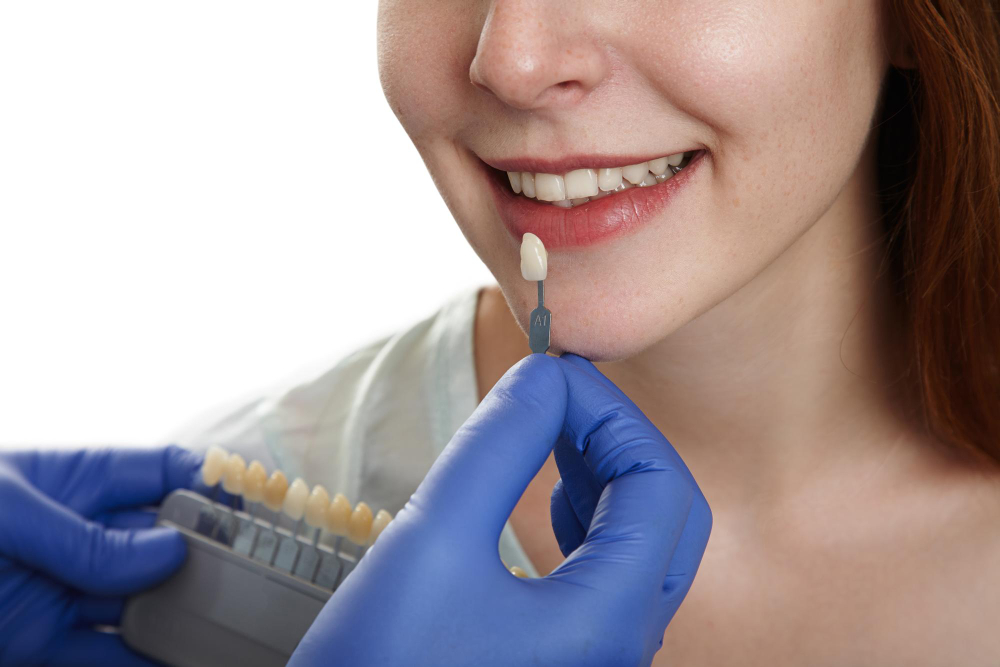
Dental Veneers: Benefits, Procedure, Risks, and Aftercare Explained

Introduction

Dental veneers are thin, custom-made shells that cover the front of your teeth. Dentists use them to improve the look of teeth that are stained, chipped, or uneven. Many people choose dental veneers to get a brighter and more even smile. In fact, porcelain veneers are a popular choice because they look natural and last long. If you are thinking about dental veneers, it helps to know their benefits, the dental veneer procedure, and how to care for them.

Benefits of Dental Veneers

Dental veneers offer many advantages. For example, they can:

  • Cover stains that do not go away with whitening
  • Fix chipped or broken teeth
  • Close small gaps between teeth
  • Make teeth look straighter without braces
  • Give a natural and bright appearance
  • Resist stains better than natural teeth
  • Moreover, porcelain veneers are strong and can last many years with good care. According to the American Dental Association (ADA), veneers can boost your confidence by improving your smile.

    Who is a Good Candidate?

    Not everyone is the right fit for dental veneers. However, you may be a good candidate if you:

  • Have healthy teeth and gums
  • Do not grind your teeth often
  • Want to fix minor cosmetic issues
  • Have enough tooth enamel for bonding
  • On the other hand, people with gum disease or weak teeth may need other treatments first. Always talk to your dentist to see if dental veneers are right for you. Some clinics even offer dental veneers in your city, making it easy to find care close to home.

    The Dental Veneer Procedure

    The dental veneer procedure usually takes two or three visits. Here is what you can expect:

  • Consultation: First, your dentist checks your teeth and discusses your goals. They may take X-rays or make impressions.
  • Preparation: Next, the dentist removes a thin layer of enamel from your teeth. This step helps the veneers fit well. Then, they take a mold of your teeth and send it to a dental lab.
  • Temporary Veneers: Sometimes, you get temporary veneers while waiting for the final ones.
  • Bonding: Finally, your dentist places the custom veneers on your teeth. They check the fit and color before bonding them with a special cement.
  • After the dental veneer procedure, you can enjoy your new smile right away.

    Risks and Potential Side Effects

    While dental veneers are safe for most people, there are some risks. For instance, you may notice:

  • Tooth sensitivity to hot or cold foods
  • Chipping or cracking if you bite hard objects
  • Color mismatch if a veneer needs to be replaced
  • Irreversible enamel removal
  • However, these issues are rare when you follow your dentist’s advice. The ADA notes that most people have no serious problems with dental veneers.

    Aftercare and Maintenance Tips

    Proper dental veneer aftercare helps your veneers last longer. Here are some simple tips:

  • Brush your teeth twice a day with a soft brush
  • Use non-abrasive toothpaste
  • Floss daily to keep gums healthy
  • Avoid biting hard foods or objects
  • Wear a mouthguard if you grind your teeth at night
  • Visit your dentist for regular check-ups and cleanings
  • With good care, porcelain veneers can last 10 years or more. If you notice any problems, contact your dentist right away.

    Frequently Asked Questions

  • How much do dental veneers cost?
  • The cost of dental veneers varies by location and material. Porcelain veneers are more expensive than other types. Ask your dentist for a detailed quote.
  • Do veneers look natural?
  • Yes, dental veneers are made to match your natural teeth. Porcelain veneers, in particular, reflect light like real teeth.
  • Are veneers permanent?
  • Veneers are not permanent, but they are long-lasting. You may need to replace them after several years.
  • Can I eat normally with veneers?
  • Yes, you can eat most foods. However, avoid biting hard items like ice or pens.
  • Is the dental veneer procedure painful?
  • Most people feel little to no pain. Your dentist may use local anesthesia during the process.
  • Conclusion

    Dental veneers can transform your smile and boost your confidence. They offer many benefits, but it is important to know the risks and care steps. If you are interested in dental veneers, consult a qualified dentist to discuss if dental veneers are right for you.